
Cooler weather is supposed to mean fewer sweat stains, less worrying about damp palms, and finally getting a break from constantly checking your clothes. For people with hyperhidrosis, though, the arrival of fall does not necessarily bring that relief. Excessive sweating can continue when the temperature drops, even when you are sitting still in an air-conditioned room or doing nothing physically demanding.
That is because hyperhidrosis is more complicated than simply getting hot. When sweating is driven by overactive nerve signals, changing seasons may do little to stop it. Fortunately, treatments such as neurotoxins can interrupt those signals and reduce sweat production in targeted areas.
If your antiperspirant drawer keeps growing but the problem is not getting better, continue reading. Understanding why you sweat is the first step toward finding something that actually helps.
What Is Hyperhidrosis?
Hyperhidrosis is a medical condition that causes excessive sweating beyond what the body typically needs for temperature regulation. Normal sweating helps cool you when you exercise, spend time in hot weather, or experience other situations that raise body temperature. Hyperhidrosis can cause significant sweating even when those triggers are absent.
The condition commonly affects areas with a high concentration of sweat glands, including:
- Underarms
- Palms
- Soles of the feet
- Face and scalp
For some patients, the sweating is localized. Someone with palmar hyperhidrosis, for example, may struggle primarily with persistently damp hands. Other patients experience excessive sweating in more than one area.
Hyperhidrosis can also interfere with ordinary routines in ways that people without the condition may underestimate. Clothing choices may revolve around hiding sweat. Handshakes can become uncomfortable. Holding paper, using electronics, wearing certain shoes, or participating in social situations may become frustrating.
There are two broad categories of hyperhidrosis. Primary focal hyperhidrosis typically occurs without another medical condition being responsible. Secondary hyperhidrosis, on the other hand, may be related to an underlying health condition or certain medications.
That distinction matters. Persistent or unexplained changes in sweating deserve appropriate medical evaluation, particularly when sweating suddenly begins, occurs predominantly at night, affects the entire body, or accompanies other symptoms.
Why Hyperhidrosis Stays Through Fall and What Can Help
Cooler temperatures may reduce ordinary heat-related perspiration, but hyperhidrosis can follow a very different set of rules. Understanding those differences helps explain why fall does not automatically switch excessive sweating off.
1. Your Sweat Glands Are Not Only Responding to Heat
The easiest misconception to make is assuming that sweating always means the body is overheated. With hyperhidrosis, sweat glands can receive excessive signals from the nerves that activate them.
That means a person can sweat significantly even when the surrounding temperature is comfortable. This is one reason hyperhidrosis year-round is possible. Summer heat may make the situation feel worse because normal thermoregulatory sweating is added to an existing problem.
Once temperatures cool, however, the underlying tendency toward excessive sweating can remain. You might be wearing a light sweater on a crisp fall day and still notice damp underarms. Your hands may become sweaty while sitting at a desk.
Those experiences can be confusing until you recognize that temperature is only one part of the sweating response.
2. Stress Does Not Disappear With Summer
Your nervous system responds to much more than outdoor temperature. Work deadlines, presentations, school schedules, social events, travel, family commitments, and holiday planning can all create emotional stress. For someone prone to excessive sweating, those situations may trigger or intensify symptoms.
Then a frustrating cycle can develop. You worry about sweating, which makes you more anxious. That nervousness can trigger additional sweating, which makes you even more conscious of the problem. This can be particularly noticeable with palmar hyperhidrosis.
Sweaty palms may become difficult to ignore during meetings, introductions, dates, or other situations where you expect to shake hands or handle objects in front of people. Fall may cool the air, but it does not necessarily calm the nervous system.
3. Fall Clothing Can Trap Heat
Autumn fashion can create its own challenge. Sweaters, jackets, long sleeves, boots, and layered outfits may feel comfortable outside but quickly become warm once you step indoors. Heated offices, restaurants, stores, and homes can make those layers feel excessive.
For someone with hyperhidrosis, the constant transition between cooler outdoor air and warmer indoor spaces can become frustrating. You may hesitate to remove a jacket because sweat marks are already visible underneath. Or you might choose darker, looser clothing primarily to disguise moisture rather than because it is what you actually want to wear.
Treating hyperhidrosis can therefore be about much more than reducing perspiration. For many patients, it is also about reducing how much mental energy goes into planning around it.
4. Antiperspirant Has Its Limits
Antiperspirants are often the first thing people try, and stronger formulations may help some patients. But there is a point where repeatedly changing products stops being a practical solution.
If you find yourself thinking, Why is my antiperspirant not working anymore?, the issue may not be the brand. Hyperhidrosis can produce sweating significant enough that ordinary over-the-counter products simply do not provide adequate control.
Even stronger formulations may cause irritation in some people, particularly when repeatedly applied to sensitive underarm skin. That is when it can be worthwhile to discuss other options rather than continuing to buy stronger products and hoping the next one finally solves the problem.
A professional assessment can also help determine whether your sweating pattern is consistent with primary hyperhidrosis or whether further medical evaluation would be appropriate.
5. Underarm Sweating Has a Nerve Component
One of the reasons neurotoxins can help hyperhidrosis is that they address the communication between nerves and sweat glands. Neurotoxins temporarily block the release of a chemical messenger involved in activating targeted sweat glands.
When those signals are reduced, the glands in the treated area produce less sweat. The treatment is localized. It is not designed to stop the body’s ability to regulate temperature everywhere.
You may have heard this approach described as Botox for underarm sweat, since Botox is one well-known neurotoxin brand associated with hyperhidrosis treatment. Depending on the practice, treatment options and neurotoxin products may vary.
The important point is the mechanism. Rather than simply trying to absorb or block moisture at the skin’s surface, neurotoxin treatment targets the nerve signaling responsible for activating sweat production in the treated area.
6. Neurotoxins Can Provide Longer Relief Than Your Daily Routine
Daily antiperspirant use means managing the problem again and again. Neurotoxin treatment works differently because its effects can persist for months, although duration varies among patients.
During treatment, small amounts of neurotoxin are injected strategically across the targeted area. The procedure is designed to reduce activity in the sweat glands responsible for excessive perspiration.
Improvement is not necessarily instantaneous. The effects develop as the neurotoxin begins interrupting the relevant nerve signals. Once treatment takes effect, patients may notice that the area stays considerably drier during situations that previously caused significant sweating.
Individual response varies, and maintenance treatments may eventually be needed as nerve signaling gradually returns. For someone whose day has been structured around hiding sweat, even a temporary period of meaningful reduction can make a noticeable difference in daily life.
7. Fall Is Actually a Practical Time to Seek Treatment
There is no requirement to wait until summer to address excessive sweating. Starting an excessive sweating treatment during fall may make sense precisely because you are no longer reacting to an immediate summer problem.
Instead, you can approach hyperhidrosis as an ongoing medical concern. It also gives you time to learn how your body responds to treatment before next year’s hottest months arrive.
If neurotoxin treatment works well for you, future maintenance can be planned around your needs rather than waiting until sweating becomes disruptive again. That turns treatment from seasonal damage control into a longer-term management strategy.
8. Your Hands May Need Attention Too
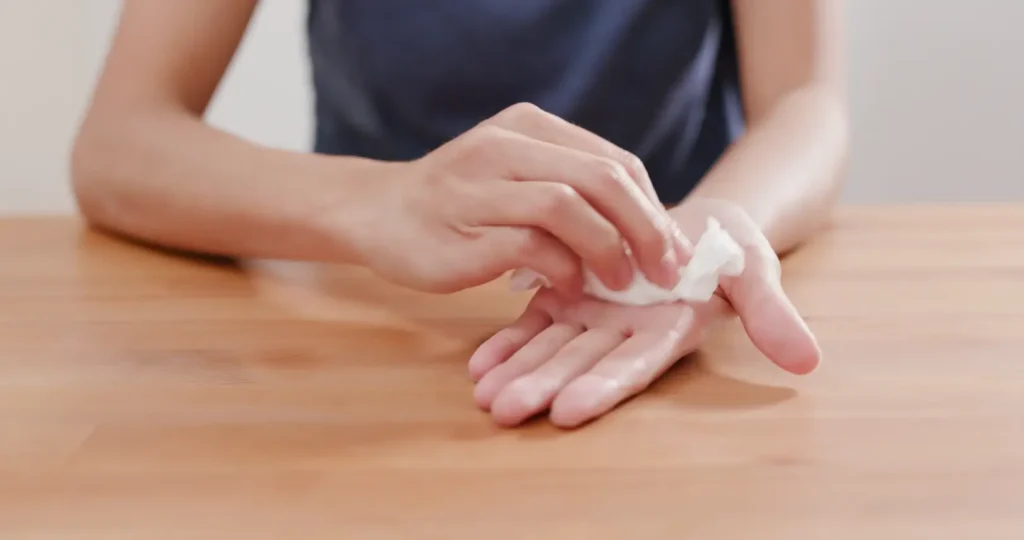
Underarms get much of the attention when people discuss excessive sweating, but hands can be equally disruptive. With palmar hyperhidrosis, moisture can make everyday interactions unexpectedly complicated. Handshakes become stressful. Phones and keyboards may become slippery.
Writing on paper can be uncomfortable. Certain work tasks may be more difficult. Because the hands are functionally complex and sensitive, treatment decisions for this area require careful evaluation.
Patients should discuss where they sweat, how severe it is, what triggers it, and how much it interferes with everyday activities. The best treatment approach can differ depending on the location and severity of symptoms.
The goal should never be simply to treat “sweating” as though every patient experiences it in exactly the same way.
Stop Letting the Forecast Decide
Cooler weather does not automatically mean relief from hyperhidrosis. When excessive sweating continues through fall, it may be time to stop treating it like a seasonal inconvenience and start addressing the mechanisms behind it.
At Allure Aesthetics & Medical Spa in Fayetteville, NC, patients can explore neurotoxin-based options for troublesome sweating through an individualized treatment approach. If fall has arrived but the sweat stains, damp palms, and daily frustration have not, professional treatment may offer a more practical way forward.
Contact us today to book your appointment!