
Your skin is constantly working behind the scenes. Every day, it replaces aging cells, responds to environmental damage, and repairs the tiny injuries that happen through ordinary life. But as the years pass, these natural processes can become less efficient. Fine lines become more noticeable, uneven texture lingers, and your complexion may not recover as quickly as it once did.
That’s where exosomes have sparked growing interest in aesthetic medicine. These microscopic particles help cells communicate, and researchers are exploring how their biological signals might contribute to skin regeneration. Unlike traditional skincare ingredients that primarily work at the surface, exosome-based products are being studied for their potential influence on cellular activity. However, their clinical benefits are still being investigated.
So, what exactly are exosomes, and why are they increasingly discussed alongside treatments such as microneedling and laser resurfacing? Keep reading to discover how these tiny messengers work, what the research suggests, and what patients should know before considering exosome therapy.
How Exosome Therapy May Support Skin Regeneration
Exosomes are fascinating because they participate in processes your body already uses to maintain healthy tissues. Understanding their biological functions can help explain why researchers are investigating their potential applications in skin rejuvenation and regenerative skincare.
1. They Help Skin Cells Communicate
Think of your skin as a community where different cells constantly exchange information. Some cells produce collagen, others maintain the skin barrier, and immune cells help coordinate responses to irritation or injury. For these processes to work together, cells need ways to communicate with one another.
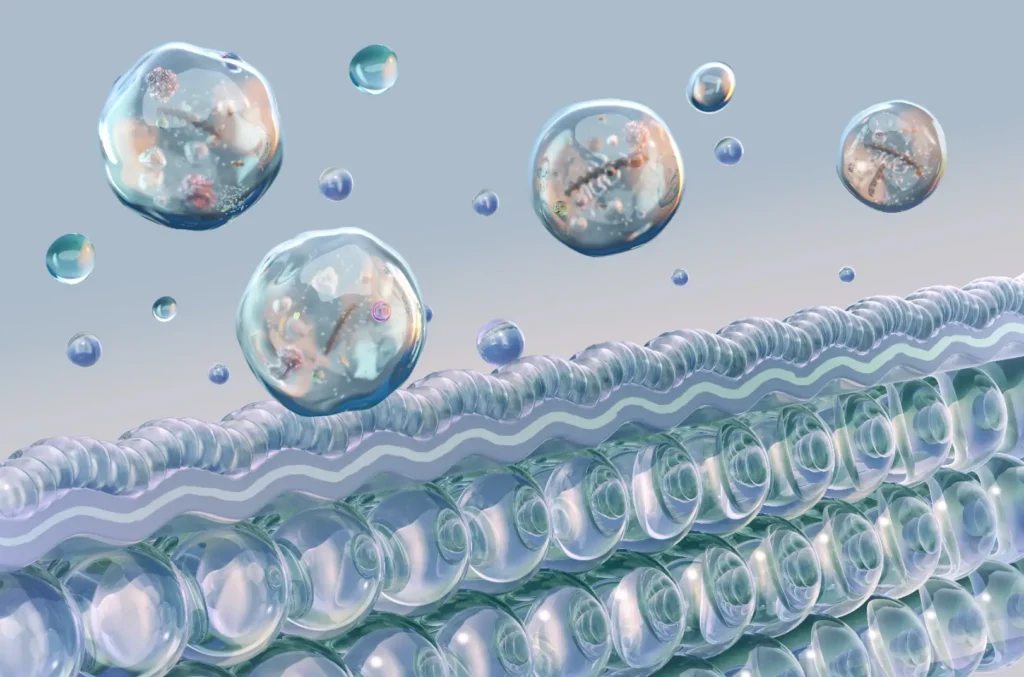
Exosomes are tiny particles released by cells that can carry biological information to other cells. They belong to a broader category called extracellular vesicles, which are membrane-bound structures involved in communication between cells. Their contents may include proteins, lipids, and different forms of RNA that influence how recipient cells behave.
This communication is one reason scientists are interested in exosomes for skin. Laboratory studies suggest that certain exosome preparations can influence cellular pathways associated with inflammation, tissue remodeling, and repair. However, these effects depend on where the particles originate, how they’re processed, and the conditions under which they’re studied.
Exosomes don’t automatically tell every skin cell to regenerate. Their biological activity is complex, and researchers are still determining which signals may be useful in clinical skincare.
2. They May Influence Collagen Activity
Collagen is one of the most important structural proteins in your skin. It helps maintain firmness, strength, and the supportive framework that gives skin its smooth appearance. Unfortunately, natural aging and accumulated sun exposure gradually affect collagen organization and production, contributing to wrinkles and changes in texture.
Fibroblasts are the cells responsible for producing much of the collagen found in the dermis. Some experimental studies suggest that extracellular vesicles from selected cell sources may influence fibroblast activity and pathways involved in collagen production. These findings have encouraged researchers to investigate whether exosome-based preparations could eventually support skin remodeling.
However, laboratory findings don’t automatically translate into visible improvements for patients. Researchers still need stronger clinical evidence to determine whether particular products consistently increase collagen in human skin, how meaningful those changes are, and how long they last.
For now, exosomes are best understood as an emerging area of research rather than an established replacement for treatments with more extensively studied collagen-remodeling effects.
3. They May Participate in Tissue Repair
Your skin has a remarkable ability to repair itself after minor injuries. When damage occurs, the body activates a coordinated response involving inflammation, new tissue formation, and gradual remodeling. This process depends on communication between immune cells, fibroblasts, and other cells involved in maintaining healthy skin.
Exosomes naturally participate in cellular signaling during these processes. Researchers have investigated whether certain preparations might influence tissue repair by carrying molecules associated with cellular responses to injury. Some preclinical studies have reported promising findings involving wound-healing pathways, but these results vary considerably depending on the preparation and experimental model.
This is where exosome therapy has attracted attention in aesthetic medicine. Some clinics discuss exosome-containing products as possible additions to treatments that create controlled skin injury, such as microneedling or laser resurfacing. The theory is that selected biological signals might influence the skin’s recovery response.
Nevertheless, evidence that commercial exosome products reliably accelerate healing in patients remains limited. They shouldn’t be presented as proven solutions for faster recovery or as substitutes for established post-procedure care.
4. They May Influence Inflammatory Signals
Inflammation is a normal part of the body’s protective response. When your skin experiences irritation, injury, or environmental stress, immune cells release signals that help coordinate healing. Problems can arise when inflammatory activity becomes excessive or persists longer than necessary.
Certain extracellular vesicles have demonstrated the ability to influence inflammatory pathways in laboratory and animal research. Depending on their cellular origin and contents, they may affect how immune cells communicate or respond to particular signals. This has led scientists to explore their potential role in conditions involving inflammation and tissue damage.
For aesthetic applications, researchers are interested in whether these effects could eventually help address visible redness or support recovery following controlled skin treatments. However, the ability to influence inflammation in an experimental setting doesn’t establish that an exosome treatment will reliably calm sensitive skin or reduce post-procedure redness.
It’s also important to remember that inflammation serves a useful purpose during healing. The goal of any future treatment would be to support an appropriate biological response, not eliminate inflammation altogether.
5. They May Support Smoother-Looking Texture
Uneven texture can develop for many reasons. Acne scars, accumulated sun exposure, changes in collagen structure, and natural aging can all affect how smooth the skin looks and feels. Some concerns involve the outermost skin layers, while others extend deeper into the dermis.
Researchers are investigating whether exosome-related signaling might influence the processes involved in skin remodeling. Early studies have explored changes in cellular behavior, tissue structure, and markers associated with repair. These findings provide a scientific reason to study exosomes further, but they don’t establish consistent clinical improvements in enlarged pores, rough texture, or acne scarring.
Patients should also distinguish between the effects of an exosome-containing product and those of the procedure performed alongside it. Microneedling and certain laser treatments already stimulate tissue remodeling through controlled injury. If an exosome product is applied afterward, any improvement cannot automatically be attributed to the exosomes.
A thoughtful treatment plan begins by identifying the cause of the texture concern. Different problems require different approaches, and emerging products aren’t necessarily the most appropriate choice.
6. They Are Being Studied for Fine Lines
Fine lines often develop gradually as collagen changes, facial movements repeat, and the skin loses some of its ability to retain moisture. Environmental exposure, particularly ultraviolet radiation, can accelerate these changes. That’s why effective rejuvenation strategies often address several aspects of skin health rather than focusing on one visible symptom.
Exosome research has generated interest because cellular signaling influences many processes associated with skin aging. Scientists are studying whether specific extracellular vesicle preparations can affect fibroblast behavior, oxidative stress responses, and tissue remodeling. Some early findings suggest possible applications in age-related skin changes, although clinical research remains relatively limited.
These discoveries are encouraging, but they shouldn’t be confused with established wrinkle-reduction results. The benefits of a particular commercial exosome product may not match findings from a laboratory study using a different preparation.
Patients interested in addressing fine lines should understand what evidence supports the recommended treatment. Proven approaches, including appropriate skincare, sun protection, and selected aesthetic procedures, may offer more predictable outcomes.
7. They May Play a Role in Pigment Research
Uneven skin tone is another concern that brings patients into aesthetic practices. Dark spots can develop after acne, inflammation, sun exposure, or hormonal changes. These different causes matter because pigmentation treatments must address the underlying condition, not simply the visible discoloration.
Researchers have begun exploring how extracellular vesicles influence communication between skin cells, including pathways associated with melanocytes. These pigment-producing cells respond to numerous biological signals, and changes in their activity can affect skin color. Understanding these interactions may eventually contribute to new approaches for pigmentation concerns.
However, current evidence doesn’t establish exosomes as a reliable treatment for melasma, sunspots, or post-inflammatory hyperpigmentation. Commercial products also differ in composition, making it difficult to generalize findings from one study to another.
Patients with persistent discoloration benefit from an accurate diagnosis before pursuing treatment. Sun protection and established pigmentation therapies remain important parts of care, especially when the skin is prone to developing additional dark spots after irritation.
A Thoughtful Approach to Skin Renewal
Healthy-looking skin begins with understanding what your skin needs, not chasing every new treatment trend. Exosomes offer an exciting area of research into cellular communication and skin regeneration, but their potential benefits for aesthetic patients still require stronger clinical evidence.
At Allure Aesthetics & Medical Spa in Fayetteville, NC, patients can explore personalized approaches to skin rejuvenation and discuss which treatments best match their concerns. A thoughtful consultation can help you distinguish emerging technologies from established options and make informed choices about your skin’s long-term care.
Call us today to book your appointment!