
Peach fuzz has a funny way of making itself noticeable. You might barely see those tiny facial hairs in the mirror, yet they suddenly become obvious when sunlight hits your cheeks or your foundation settles unevenly. They’re completely normal, but that doesn’t mean everyone enjoys how they look or feel.
Those soft, delicate strands are called vellus hair, and dermaplaning offers a simple way to remove them while exfoliating the skin’s surface. The treatment can leave your complexion feeling smoother and looking brighter. Still, one concern keeps many patients from trying it: Will all that peach fuzz grow back thicker, darker, or more noticeable?
Fortunately, the science behind hair growth tells a different story. Let’s clear up the most common misconceptions about dermaplaning, explain what really happens to facial hair, and help you decide whether this treatment deserves a place in your skincare routine.
Dermaplaning Myths: What’s Actually True?
Dermaplaning has become a popular facial treatment, but its growing popularity has also created plenty of confusion. Understanding what the procedure actually does can help you separate realistic benefits from misleading claims.
1. Myth: Your Hair Grows Back Thicker
Let’s start with the concern that keeps many patients from booking their first appointment.
Truth: Dermaplaning doesn’t change the thickness, color, or natural growth rate of facial hair.
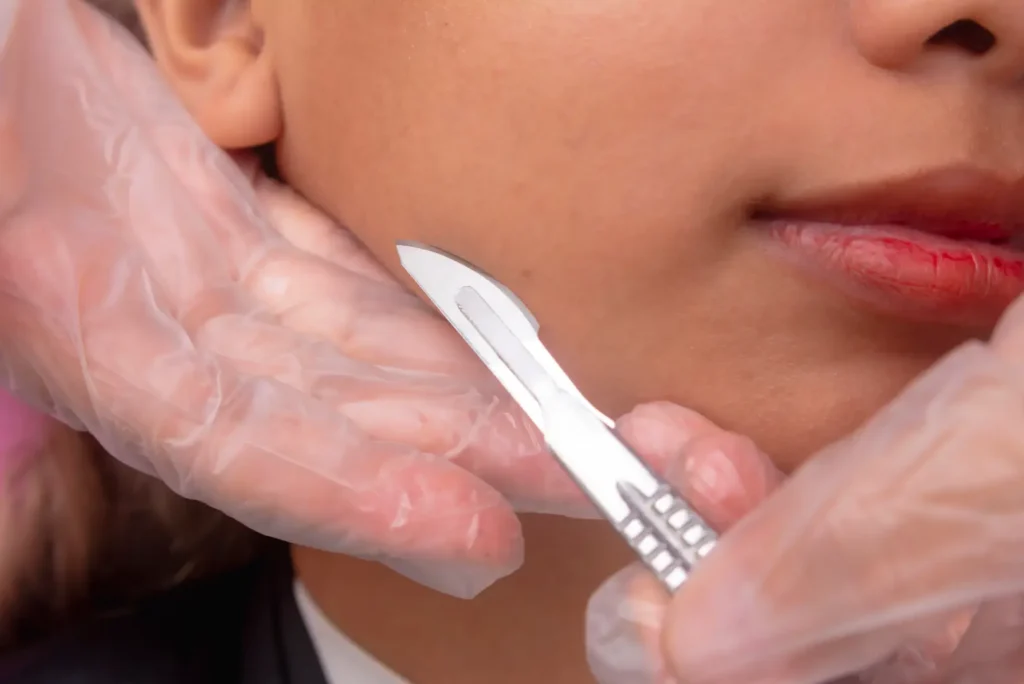
Hair growth begins inside follicles beneath the skin’s surface. Each follicle produces hair according to factors such as genetics, hormones, age, and individual biology. Dermaplaning uses a specialized blade to remove fine vellus hair at the surface. It doesn’t reach the follicle or alter the biological processes responsible for producing hair.
So why does regrowth sometimes feel different? When hair is cut, its naturally tapered tip becomes blunt. As that short hair emerges, it may temporarily feel slightly more noticeable to the touch. However, the strand hasn’t actually become thicker. This distinction matters because a temporary change in texture isn’t the same as a permanent change in hair growth.
If you’ve been asking, does dermaplaning cause hair growth, the answer is no. It doesn’t stimulate follicles to produce additional hair or transform soft peach fuzz into coarse facial hair.
2. Myth: Peach Fuzz Comes Back Darker
Some patients worry that removing light facial hair will cause it to return with a darker appearance.
Truth: Dermaplaning doesn’t change the pigment produced by your hair follicles.
Vellus hair is typically fine, soft, and relatively light in color. Its characteristics are determined beneath the skin, not by whether the visible strand has been removed. When new hair emerges, it generally retains its original color and texture.
Occasionally, freshly cut hair may appear more noticeable because the blunt end reflects light differently from a naturally tapered strand. Changes in lighting, skin contrast, and the length of regrowth can also influence how visible facial hair appears.
These effects don’t mean dermaplaning has altered the hair itself. If you begin noticing genuinely darker or coarser facial hair, hormonal changes, medications, or other medical factors may be involved.
A qualified healthcare professional can help evaluate unexpected changes rather than automatically attributing them to a cosmetic treatment.
3. Myth: Dermaplaning Is Just Shaving
At first glance, dermaplaning and shaving seem almost identical. Both involve a blade moving across the skin, after all.
Truth: They share a hair-removal mechanism, but professional dermaplaning places additional emphasis on controlled surface exfoliation.
When comparing dermaplaning vs. shaving, the main difference lies in the tools, technique, and intended treatment experience. Ordinary facial shaving primarily removes visible hair. Professional dermaplaning uses a specialized blade held at a controlled angle to remove fine vellus hair and some of the outermost dead skin cells.
This can create a smoother surface and improve the appearance of rough texture. However, dermaplaning shouldn’t be mistaken for a deep resurfacing procedure. It doesn’t reach the deeper layers of skin involved in collagen remodeling, and it cannot correct significant acne scars or deep wrinkles.
Both shaving and dermaplaning can also cause irritation or small cuts if performed incorrectly. Professional technique can help manage those risks, but neither method is completely risk-free.
4. Myth: It Makes Hair Grow Faster
Another common misconception is that dermaplaning somehow encourages the skin to produce new hair more quickly.
Truth: Removing hair above the skin doesn’t accelerate the follicle’s natural growth cycle.
Hair follicles move through biological phases of growth, transition, and rest. These cycles continue regardless of whether the visible hair has been trimmed or removed at the surface. Dermaplaning doesn’t send a signal telling follicles to grow faster.
What patients sometimes notice is simply the return of hair that was temporarily removed. Because the skin initially feels especially smooth, even small amounts of regrowth may become more noticeable by comparison.
That doesn’t mean the hair is growing faster than before. It’s similar to noticing stubble after shaving your legs. The contrast between freshly smooth skin and emerging hair can make ordinary regrowth feel more dramatic.
Understanding this process helps patients approach maintenance with realistic expectations.
5. Myth: It Damages Healthy Skin
The thought of a blade moving across your face can sound intimidating, particularly if you already have sensitive skin.
Truth: Properly performed dermaplaning can be a gentle form of superficial exfoliation for suitable patients.
Your skin naturally sheds dead cells through a process called desquamation. Sometimes those cells accumulate unevenly, contributing to a rough or dull-looking surface. Dermaplaning removes some of that superficial buildup, leaving the skin feeling smoother.
However, removing too much of the outer layer can compromise the skin barrier. Aggressive technique, repeated passes, or combining several exfoliating treatments too closely together may increase irritation.
Patients with active inflammatory acne, open wounds, skin infections, or certain sensitive skin conditions may need to postpone treatment. This is why a skin assessment matters. The goal isn’t to remove as much skin as possible. It’s to achieve controlled exfoliation without unnecessarily irritating healthy tissue.
6. Myth: Dermaplaning Causes Acne
Some patients worry that removing peach fuzz will automatically trigger breakouts.
Truth: Dermaplaning doesn’t inherently cause acne, but irritation or inappropriate treatment can contribute to skin problems.
Acne develops through several interacting processes, including excess oil production, clogged follicles, inflammation, and bacterial activity. Removing vellus hair doesn’t directly create those underlying conditions.
However, dermaplaning over active inflammatory lesions can irritate the skin and potentially worsen existing breakouts. Poorly cleaned tools or improper technique may also introduce additional problems. For patients with acne-prone skin, the decision depends on the type and severity of their breakouts.
Someone with generally clear skin and occasional clogged pores may have different treatment considerations from someone experiencing widespread inflamed acne. A provider can determine whether dermaplaning is appropriate or whether another skincare treatment would be more suitable.
7. Myth: Results Last Forever
Dermaplaning can leave the skin feeling remarkably smooth, but that immediate improvement isn’t permanent.
Truth: The results are temporary because the skin continues renewing itself and facial hair naturally regrows.
The treatment removes existing surface buildup and visible peach fuzz. It doesn’t stop future hair production or permanently alter the skin’s renewal cycle. Many patients choose periodic appointments to maintain the smoother appearance they enjoy.
However, treatment frequency should depend on skin sensitivity, recovery, and the provider’s recommendations. Scheduling sessions too close together can increase the risk of irritation. It’s also worth remembering that regular dermaplaning isn’t medically necessary.
Some patients love the cosmetic effect and choose to maintain it. Others prefer occasional treatments before special occasions. Both approaches are perfectly reasonable.
8. Myth: It Works Like a Chemical Peel
Dermaplaning and chemical peels are both exfoliating treatments, which sometimes leads patients to assume they produce identical results.
Truth: They remove surface cells through different mechanisms and may address different concerns.
Dermaplaning provides mechanical exfoliation. A specialized blade physically removes superficial buildup and fine facial hair. Chemical peels use carefully selected chemical solutions to exfoliate the skin at varying depths.
Depending on the formulation, peels may address concerns such as uneven pigmentation, acne, or certain signs of photoaging. Dermaplaning primarily improves immediate surface smoothness and the appearance of dullness.
It may complement other treatments for selected patients, but combining exfoliating procedures requires professional judgment. More exfoliation doesn’t always mean better results. The most appropriate approach depends on your skin condition, sensitivity, and treatment goals.

Let Your Skin Tell the Story
The biggest misconception about dermaplaning is also one of the easiest to clear up: removing peach fuzz doesn’t make it grow back thicker, darker, or faster. The treatment simply removes fine facial hair and superficial dead skin cells, creating a smoother surface without changing how your follicles produce hair.
At Allure Aesthetics & Medical Spa in Fayetteville, NC, patients can explore professional dermaplaning as part of a personalized skincare approach. Whether you’re hoping for smoother makeup application or a brighter-looking complexion, understanding what the treatment can realistically accomplish is the first step toward feeling confident in your choice.
Connect with us today to schedule your appointment!